“Mountains are not Stadiums where I satisfy my ambition to achieve, they are the cathedrals where I practice my religion” — Anatoli Boukreev
Click here to go to the photo/video album for this day
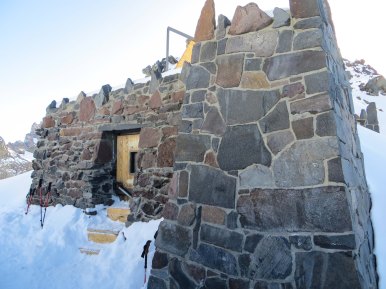
 In terms of skills complexity, today took the cake. We got to put into practice what we’d learned in theory during lectures about crevasse rescue & building anchor systems for those rescues. Unfortunately we only had a couple of hours to do so on account of a giant storm that was rolling in. The plan was to do our stuff & get off the mountain as fast as possible. 60 mph winds were predicted later today at Camp Muir, with 90 mph winds at the summit.
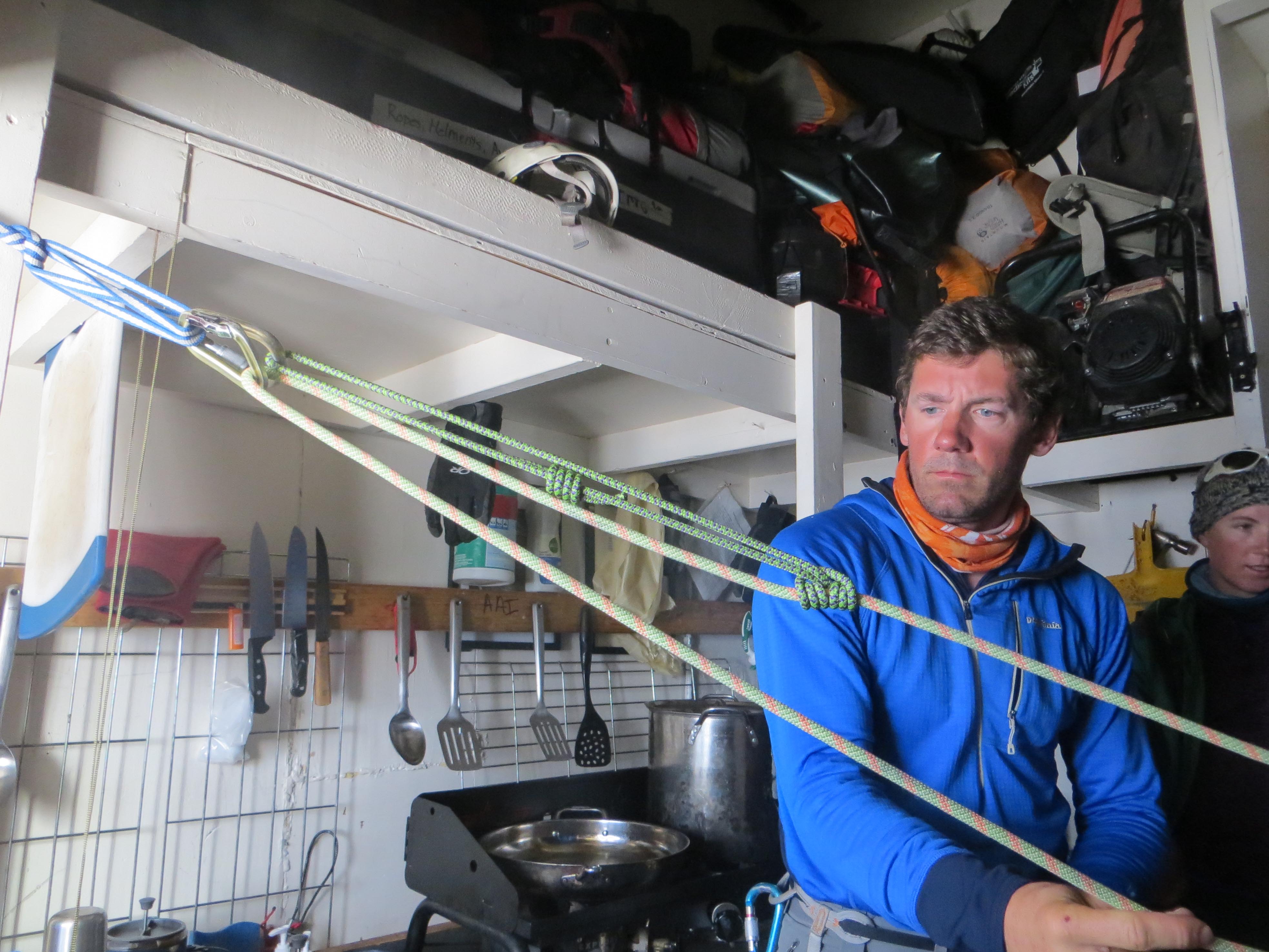
We again got up at 6, and after breakfast began practicing digging anchors & setting up 2:1 “C”, and 3:1 “Z” pulley systems to boost our mechanical advantage & assist in rescuing people(in this case we used weighted packs) from the “crevasse” (here, a very steep slope). It’s really amazing what you can do with just a few ropes, Carabiners & some Prussik knots! We dug our anchors – Double Inline Deadman, meaning two separate anchors, one a few feet behind the other(to minimize the angle of rope between them & thus make the anchors more effective), and then ran a full simulated crevasse fall & rescue. With two people on a rope, and the weighted pack as a simulated third member, the pack was thrown off hillside, causing both team members to self-arrest to stop the pack’s fall.
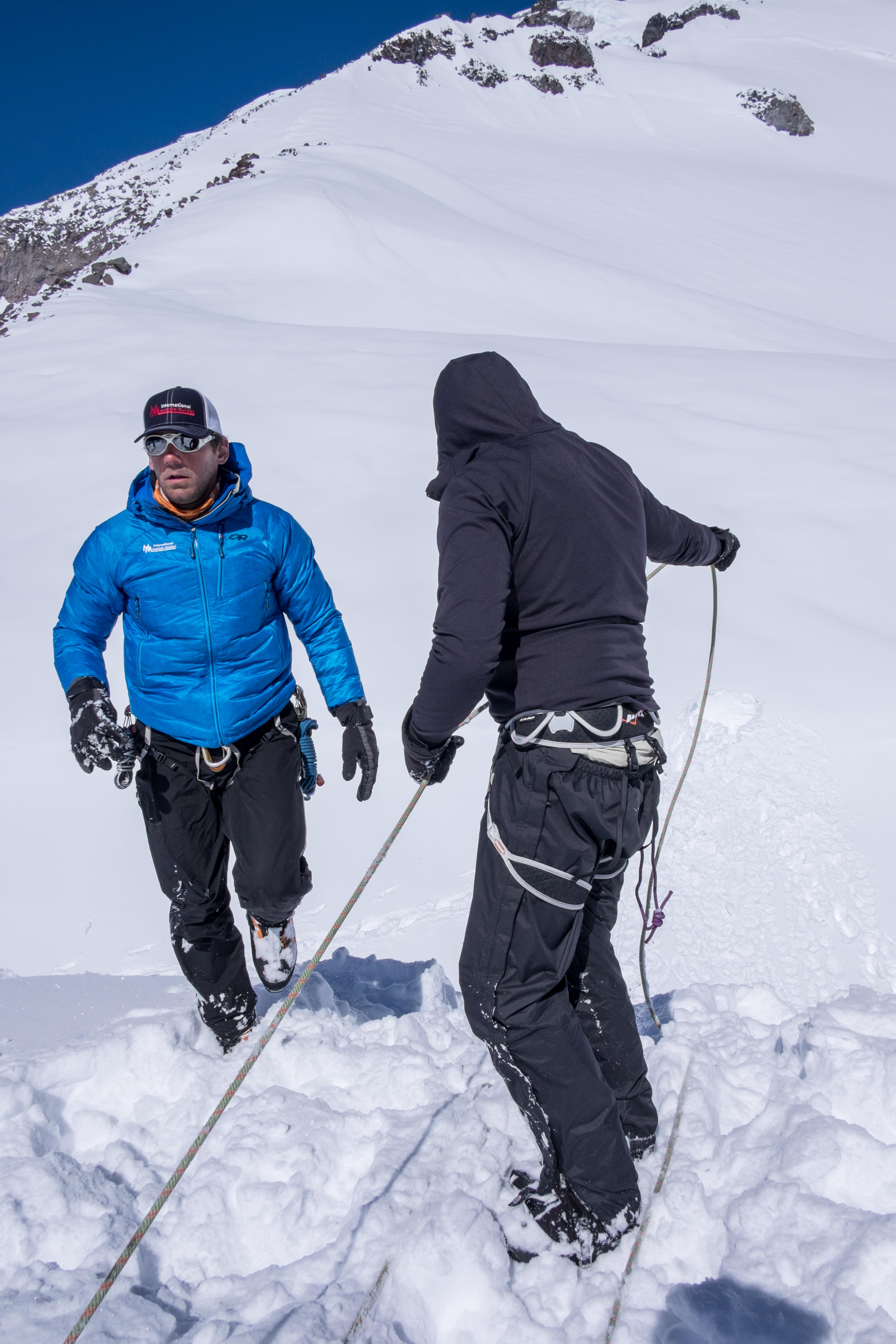 Once the pack was stopped by the two teammates’ self-arrests, the person at the end of the rope would detach himself from the rope, confirm the condition of the fallen “person”, then begin setting up the 3:1 pulley system, tying the rope to the anchors & attaching Prussik knots to haul the fallen person out. This is definitely a skill that needs regular practice, as there were many steps & places where it would be easy to mess up. Even with a 3:1 advantage(100 lbs of force can lift 300 lbs of weight), it was pretty difficult hauling the pack up with Jonathan doing his best to pull on it from behind!
 We’ve learned that rescues of any kind – from crevasses or avalanches, are a huge pain in the ass for the rescuers. It can be risky, takes an absurd amount of effort, and demands competency in technical skills to be carried out in a timely manner. So the lesson to be learned here is – don’t get caught in an avalanche, and don’t fall into a crevasse in the first place!
After a couple of rounds with the rescue practice, we packed up our gear as fast as possible(though Chris called us “The Masters of Wasting Time”), and began our descent down the Muir Snowfield by 12:45 PM.
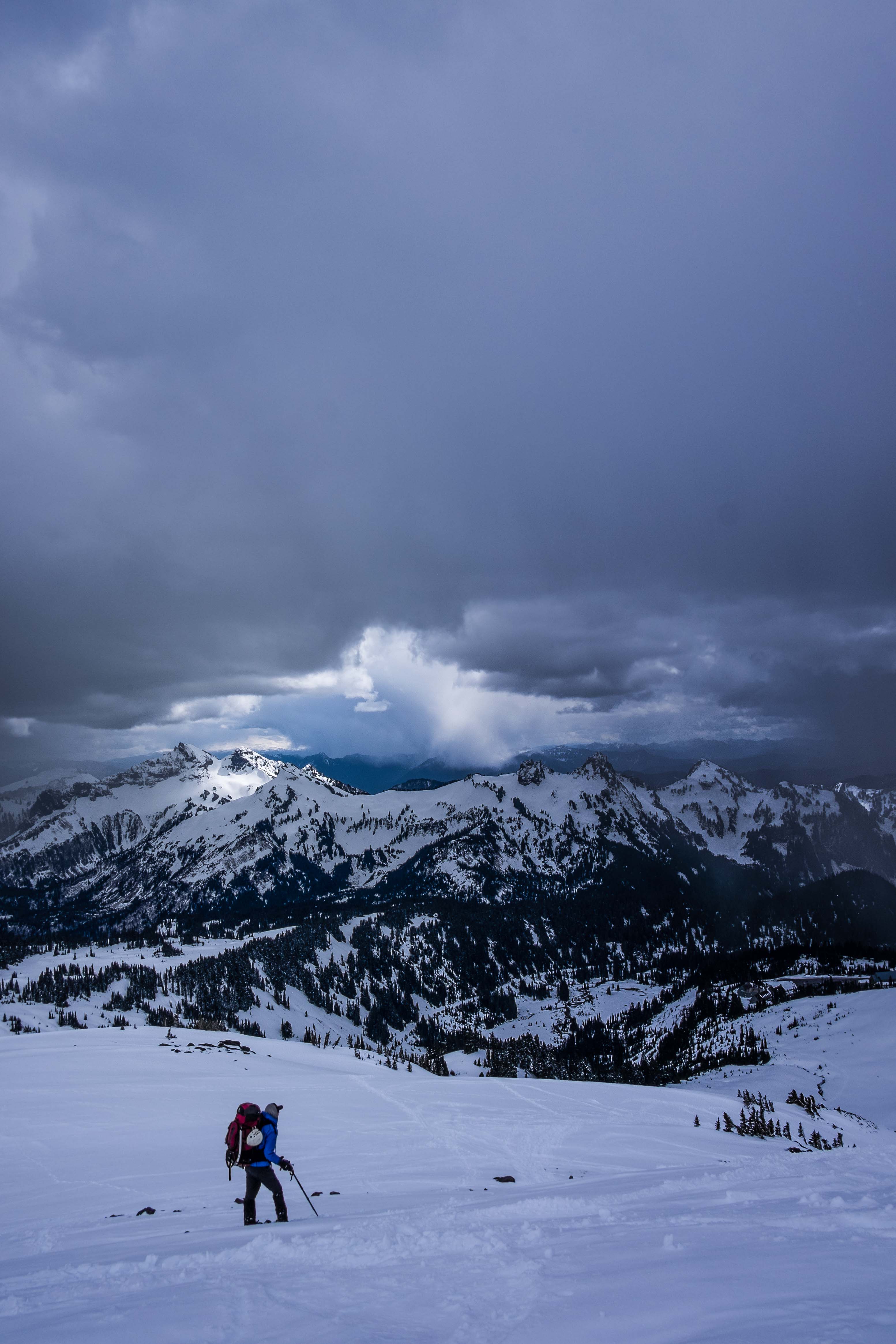
Going downhill in deep snow with snowshoes & packs takes a surprising amount of effort, and it didn’t help that my heels & toes kept moving inside my boot, causing some blistering. My larger snowshoes, while providing better floatation for the uphill, turned out to be clumsy going downhill so I brought up the rear while everyone else went ahead. There was a point where Rushi, trying to go down some very steep terrain with his sled, ended up glissading(sliding down on your butt) down a significant portion. He had a lot of fun doing so, but I don’t think it was entirely intentional.

Back at Paradise, we rode the van back to IMG HQ and had hot showers, feeling great to be back, even if it was unfortunately a day earlier than expected. We went out to dinner at the same diner as on the first night, feeling accomplished. Chris tells us that even getting to Camp Muir is an accomplishment for a winter ascent, and that the last seminar team to actually summit in the winter was in 2011. I think we all slept well that night, in the warm bunks of IMG HQ.
 Planetary Muffin Expeditions