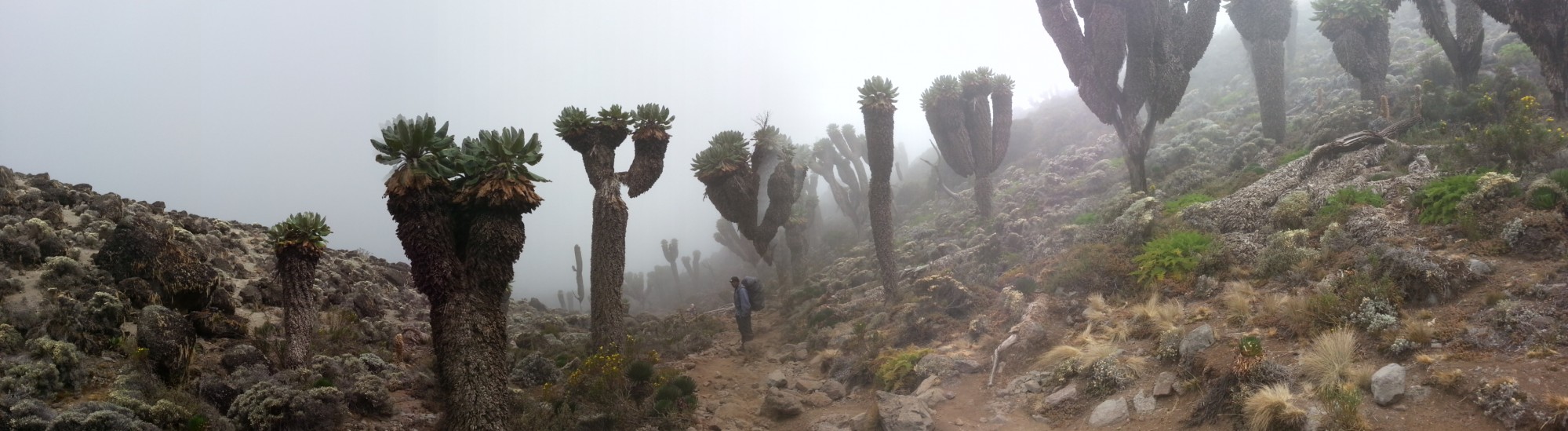
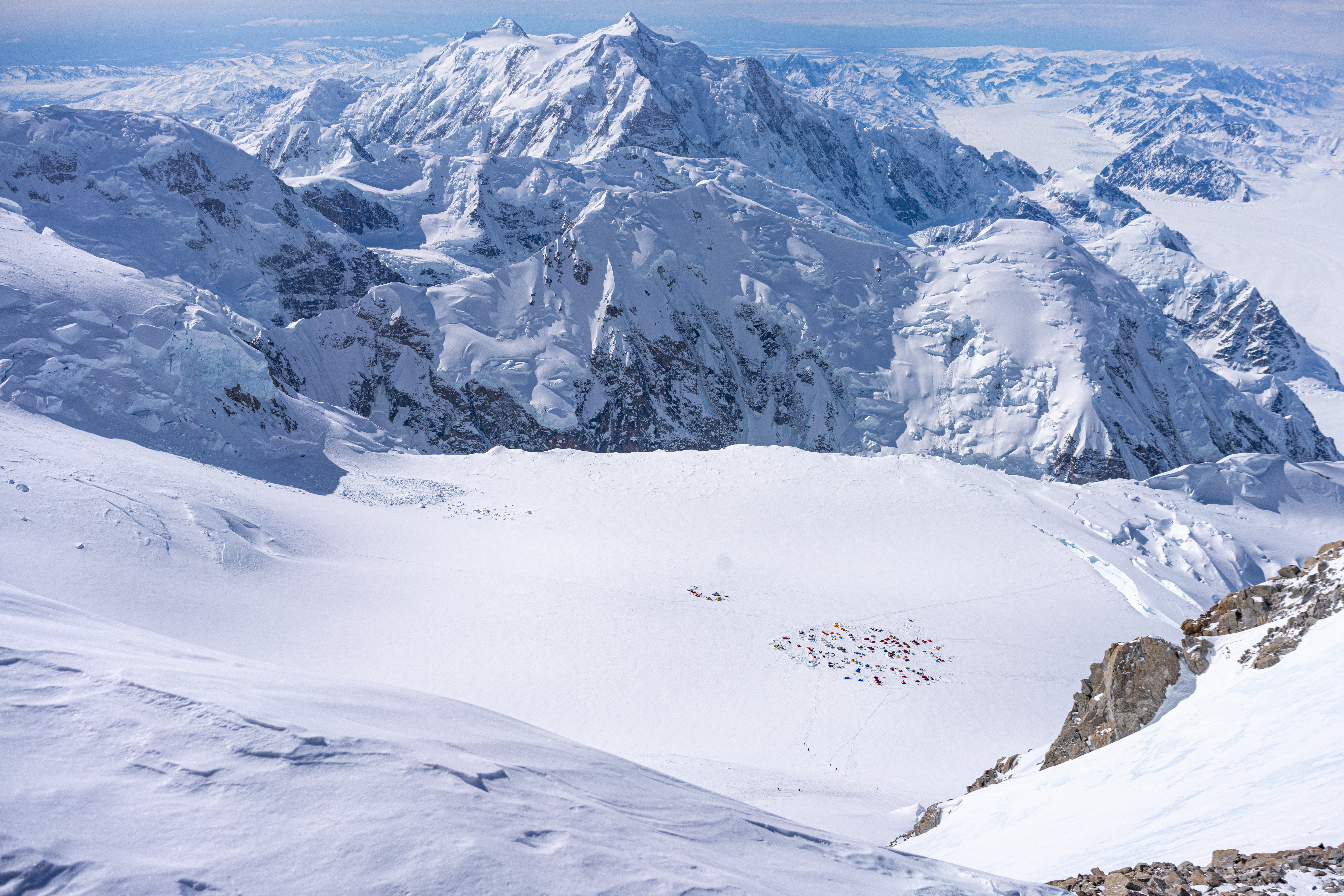
Owing to the difficulty of this ascent and the weather conditions, I didn’t have a chance to take many pictures. I’ll have to fix that on the way down!
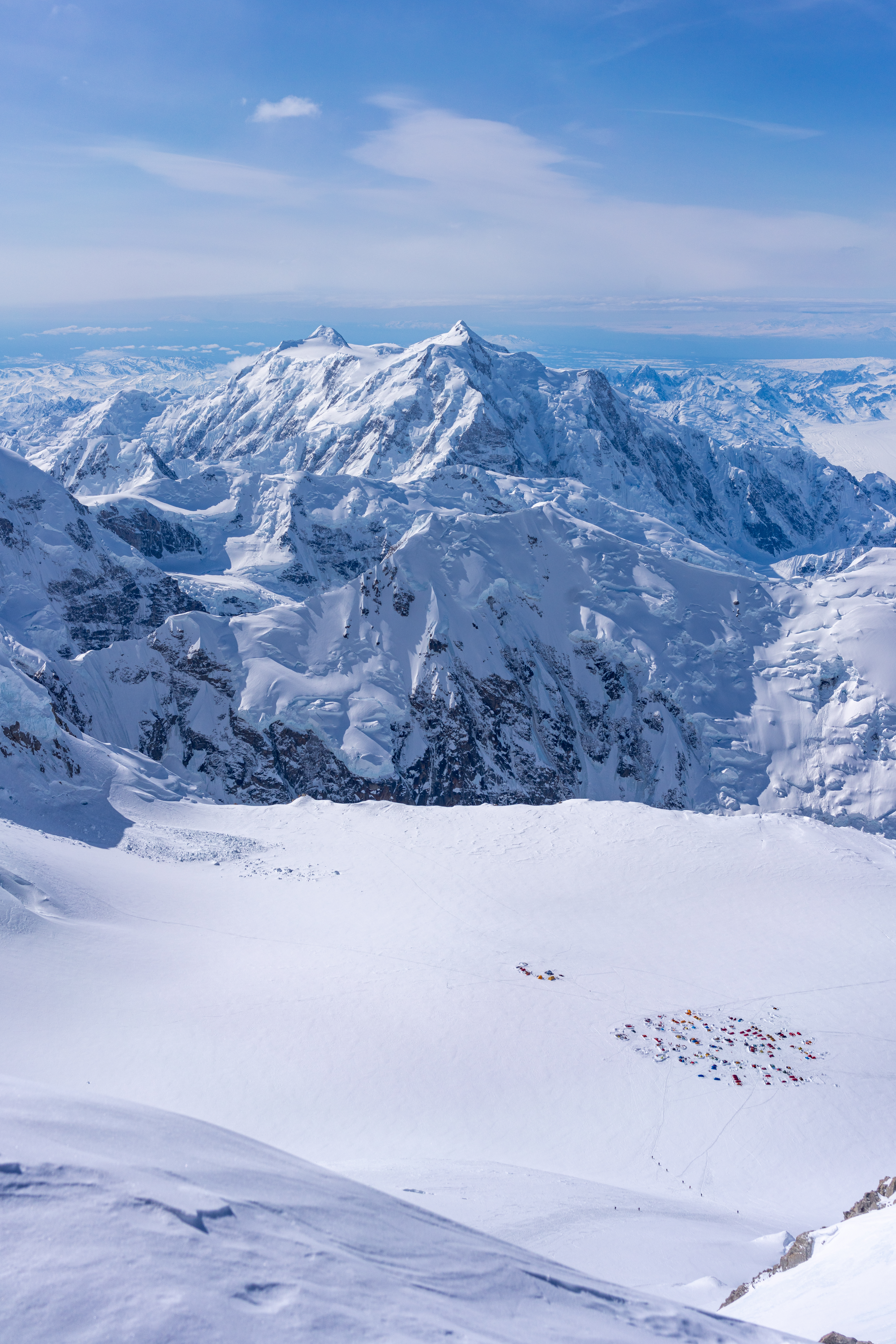
After yesterday’s rest day, I was feeling pumped for the climb up the Headwall. Some of the best views on Denali are said to be along this route, but unfortunately for us, weather rolled in. We got a later start going up the Headwall, so we weren’t too cold. Unfortunately, the Headwall was hard packed ice. While crampons have no problem climbing ice, it’s far easier to kick steps into snow than ice. With steps, the effort becomes a bit like stair climbing; pretty easy. But if you can’t, your legs are splayed on this very steep incline, and each step requires several times more effort and care.
To make matters worse, my big mitts were proving absolutely terrible for manipulating my ascender and carabiners going up. It’s easy to practice a skill in ideal conditions, but when you’re doing it for real, complications arise and you sink to your lowest level of training. In my case, I hadn’t trained much with mitts on, so I held the team up whenever I had to handle the rope (which was about every fifty feet or so).
It took us about three hours to ascent the two thousand feet up the Headwall. That’s when the weather went from bad to worse. The wind kicked up and clouds rolled in, reducing visibility and blocking the sun, which caused the temperature to drop precipitously. There go my views! We got to see nothing. The sixteen ridge is part rock, part snow, and crampons don’t do well over rock. To add to this, there is another section of fixed ropes at a very steep area called Washburn’s Thumb, so the climbing is pretty technical here.
As always, Colby led, putting in running belays as we proceeded. Running belays (or running protection) is a system for keeping a team safe in highly dangerous/exposed terrain where a fall likely means death. Though we’re roped to each other, we’re not normally connected to an anchor on the mountain itself, unless there are fixed lines. Fixed lines are rare, so in these cases, the leader hammers in a picket anchor into the ice, which the team clips into. The last person is responsible for removing carabiners. This means you need enough pickets for the whole stretch, but this didn’t turn out to be an issue. On a route as well traveled as this one, there were pickets installed at most locations already. We just had to clip in and out of them. Again, my mitts caused some issues, slowing us all down.
We stopped once for a short break in the cold, biting wind, but otherwise we just trooped along the ridge all the way to seventeen thousand foot camp. The journey took us six hours, and we were spent as we rolled in… but we’d made it to the highest camp on the mountain. There was only one day of effort left. Only one day to the summit.
Luckily, several AMS teams had bunched up at Seventeen camp awaiting a summit window, so they helped us flatten the ground and build snow walls. Colby wanted big, beefy walls, because Seventeen Camp can see up to 100 mph winds at times. With several teams helping, we built Fort Knox, but I didn’t have any role in it. I was so exhausted, all I could do was sit on my pack and watch.
 Planetary Muffin Expeditions