Click here to view the photo + video album for this part of the trip
The day after moving to Eleven Camp, we rested, ate, and chatted. The weather was fantastic apart from a couple of clouds in the sky, which made resting especially frustrating. I felt like we were wasting precious weather, but Colby knows this mountain like the back of his own hand. If he says this is the best itinerary, who am I to question him? His experience outstrips my own many fold.
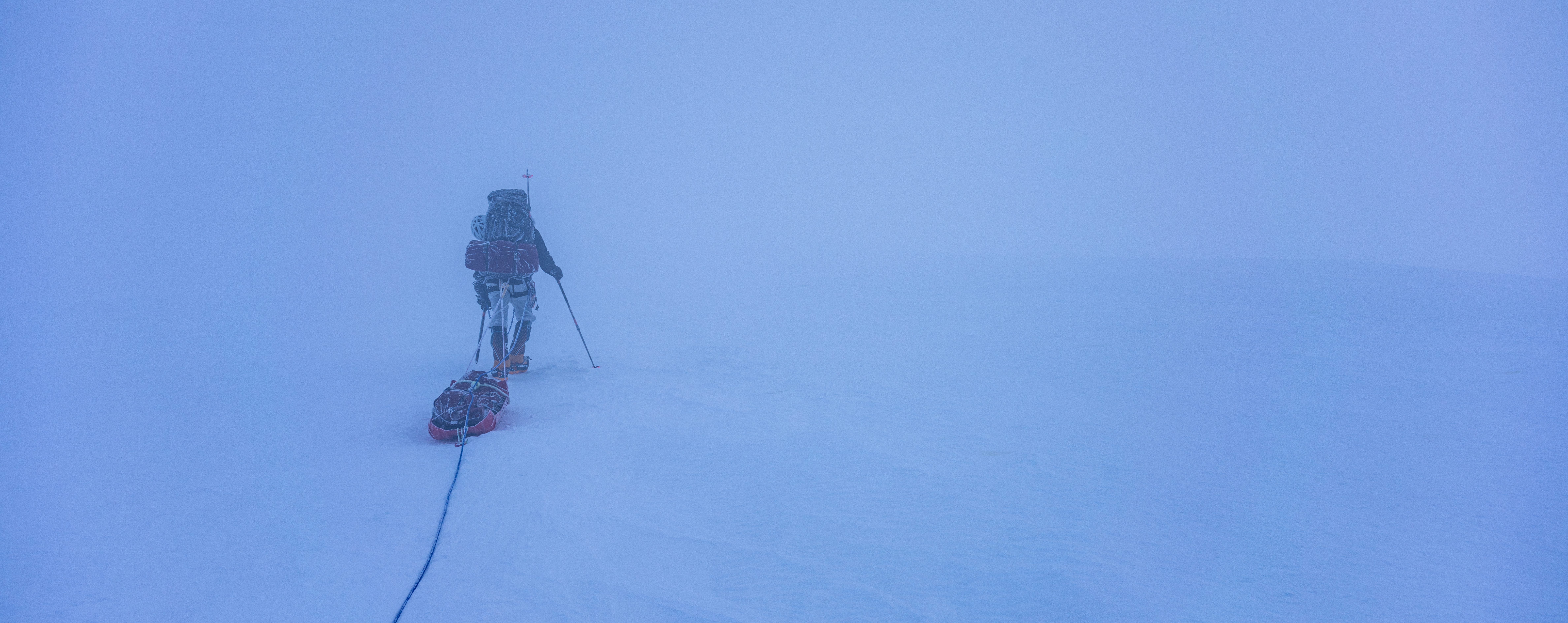
Turns out, I needed that rest day. Denali starts off easy but gets progressively harder as you move up the mountain. The trip up to Fourteen was our first really tough day. Six hours of climbing, three thousand feet of elevation gain. Visibility was nonexistent, and winds were low, but nonzero. Even a gentle breeze can make life difficult if it gusts for hours while it’s zero degrees outside.
Our path to Fourteen first took us up the steep slopes of Motorcycle Hill, about a forty degree incline. This was the first truly steep part of our climb, and until now I’d assumed that we’d only haul our sleds up gentle slopes. Nope! Our sleds will come with us to Fourteen Camp. We did swap our snowshoes for crampons though. Snowshoes are like oversized duck feet that strap onto your boots. They’re large, heavy pieces of webbing and metal that are incredibly uncomfortable, but they distribute your weight over the snow, reducing the likelihood of falling into a crevasse. A necessary evil.
Snowshoes are cumbersome on steeper slopes, so we cached them at Eleven Camp and donned crampons – metal spikes that strap to your boots and are designed to dig into ice and snow. They allow you to climb on near-vertical slopes and are far lighter than snow shoes. The tradeoff is that they can put a great deal of stress on your joins. Even so, we were glad to rid ourselves of the snowshoe monstrosities for the rest of our climb! Caching them also meant less weight for us to carry up.

Past Motorcycle Hill, we continued in near zero-visibility conditions onto the Polo Field, a gradually ascending snow field, before making our way to the infamous Windy Corner. Colby later confided that he was flying blind and was relying on his dozens of prior climbs to track our path up the Polo Field. Go too far in either direction and you’re liable to fall off steep cliffs, so I was especially thankful to have the most qualified guide in the world as my leader!
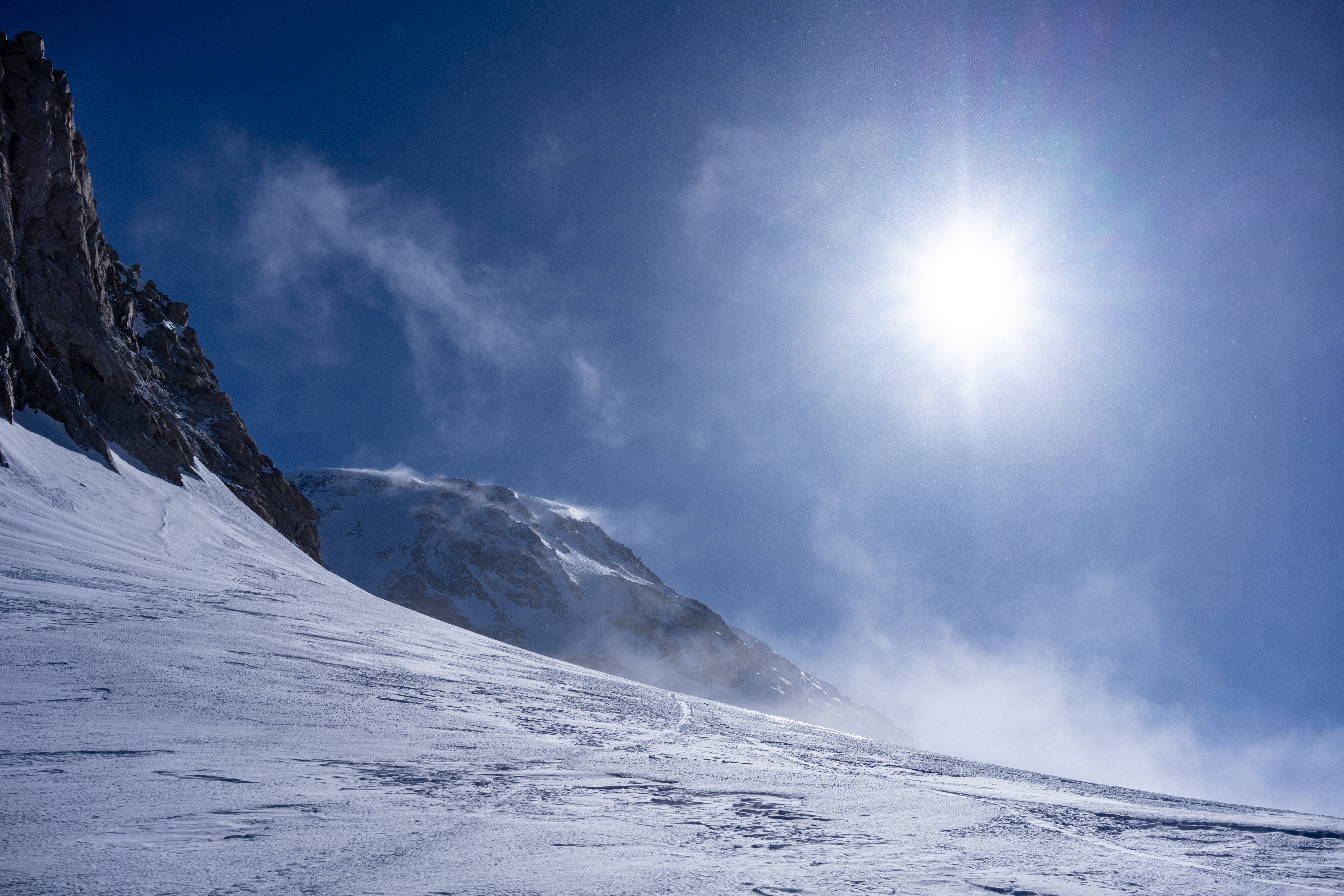
Windy corner has a bad rep. Several people have died here. Owing to the geography, it’s windy. Additionally, you’re in an extremely high rockfall danger area. Many of the deaths have been due to boulders crushing climbers. It’s a short stretch, and flat, but there would be no stopping here. We want to minimize our exposure by traveling as quickly as possible through this area. We quickly stopped the team and grouped up to put our helmets on. You don’t usually assemble like this as you lose the ability to arrest other team members if they fall into a crevasse. But this was a rock area where Colby knew there was no crevasse danger, so it was safe to do.
Colby offered me the opportunity for a snack break, but he also said that the high winds here would die off completely once we rounded the corner (probably). Taking a break in freezing wind is one of the most unpleasant experiences in mountaineering, so I passed. I’d rather bask in the glorious sun to eat my energy chew and peanuts!

Windy corner was thankfully uneventful, and true to Colby’s word, the wind died off, and we broke through the cloud layer that had us climbing blind. All of a sudden, we found ourselves in sunny, beautiful alpine terrain with visibility for hundreds of miles above the sea of clouds. What an incredible change!
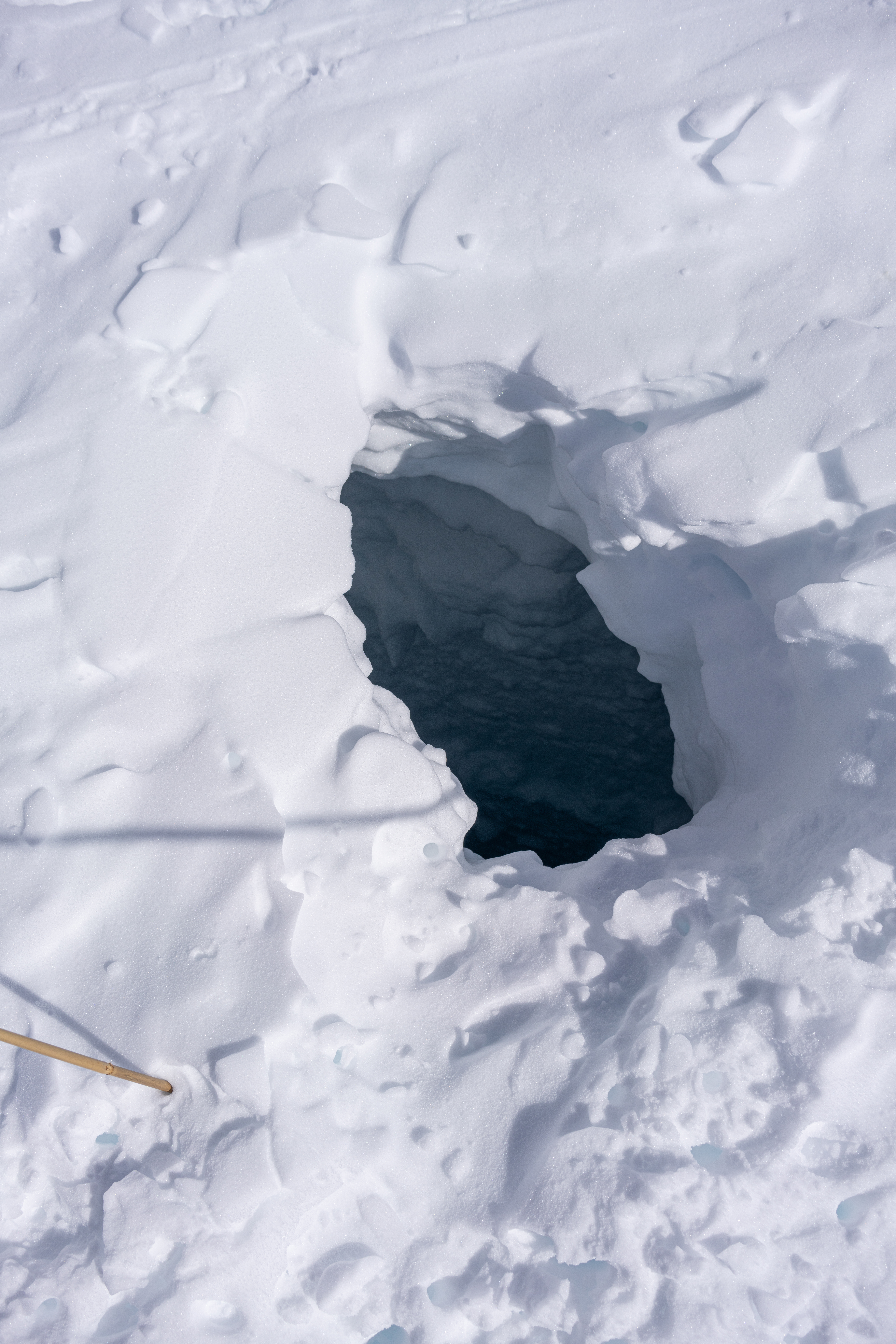
After a much needed break, we shed layers and slogged another hour or so to camp. Along the way, we found a crevasse where the British military guy we met at Eleven Camp had fallen into. Scary!
We now had the exact opposite problem – the sun was brutally hot and we were all sweating bullets. The sun feels nice for the first ten minutes, but then it becomes an oven. It is surprising how exhausting it can be to climb under such scorching heat. I was spent by the time we arrived, and the route wasn’t even steep!
Fourteen Camp was by far the largest camp we’d seen on the mountain. It actually felt like a true, proper base camp with a hundred or more tents. It’d take twenty minutes to walk from one side to another!
As soon as we rolled in, several other AMS teams swarmed to level out our campsite and cut snow blocks for our latrine and our wind walls. One of the perks of traveling with the owner of a company – everyone is only too happy to help! I definitely got the sense that Colby was highly respected by his guides. I also felt like every group we passed, AMS or not, knew who he was!
After a delicious meal, I was ready to hit the sack.
 Planetary Muffin Expeditions